A familiar way to explore Latin America
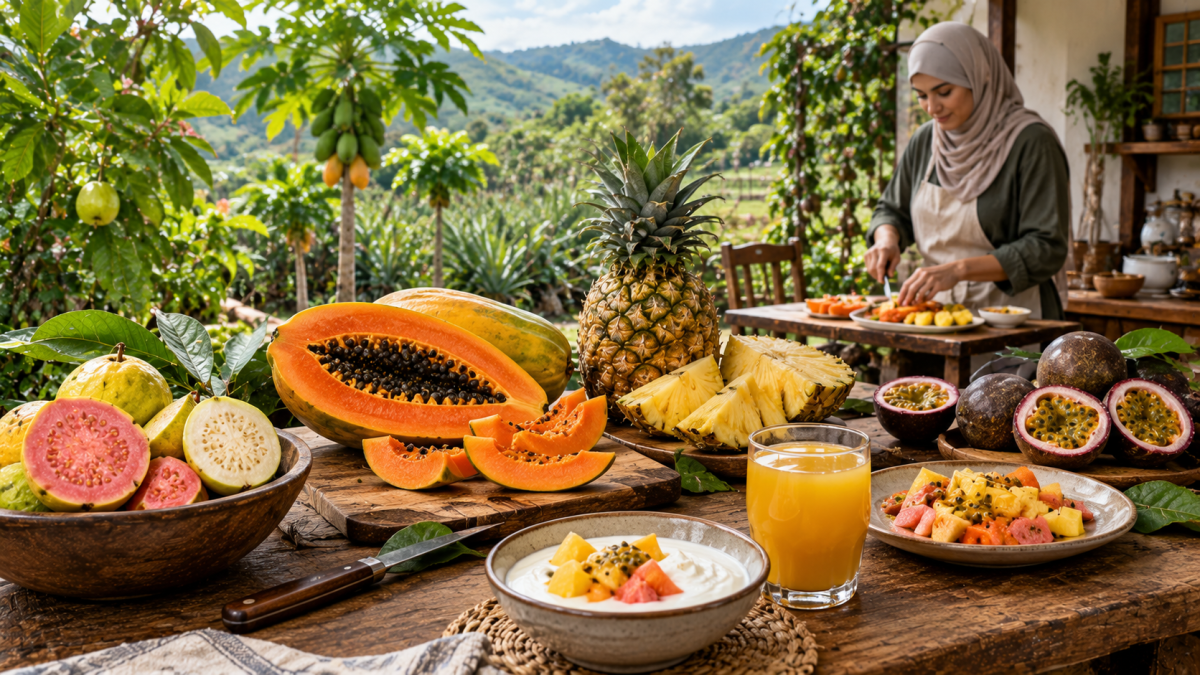
A fruit stall can offer an inviting introduction to Latin America without requiring a long journey or an elaborate recipe. Guava, papaya, pineapple, and passion fruit connect the region's plant diversity with the everyday pleasure of preparing food. Some may already be familiar in your local market; others may be occasional discoveries. Looking closely at their textures and uses makes them more interesting than a collection of colourful ingredients.
For readers across the Arab world, the useful starting point is the table rather than the idea of something unfamiliar. A piece of fruit can sit beside plain yogurt, become part of a simple dessert, or be enjoyed on its own. This guide explores four fruits with American origins and suggests ways to compare them at home. The serving ideas are suggestions for your kitchen, not claims that every household in Latin America follows the same customs.
Guava and the character of a fruit paste
Guava is native to the American tropics. Its flesh can be white, yellow, pink, or red, and varieties differ in sweetness, acidity, and aroma. These differences explain why the guava you remember may not resemble the next one you cut open. Colour alone does not describe the whole experience. [1]
Colombia offers a specific culinary connection: guava is associated with bocadillo veleño, a fruit confection, as well as jams and jellies. [2] It is a useful example of how preparation changes our encounter with an ingredient. Fresh fruit invites attention to aroma and texture; a concentrated paste brings a different consistency and a more compact presentation.
Try placing a few fresh guava slices beside a small piece of guava paste, if both are available. Taste them separately before combining either with plain yogurt or a mild cheese. The comparison is more revealing than adding several strong flavours at once. Check the ingredient list of a packaged paste rather than assuming that all products have the same composition. Buy a modest quantity for a first tasting.
Papaya and the value of a gentle flavour
Papaya is native to Central America. When ripe, its flesh is soft, juicy, and sweet, with a flavour that the University of Florida compares to melon or mango. Green papaya can also be cooked as a vegetable, so ripeness changes the kind of preparation for which the fruit is suitable. [3]
For a simple introduction, use ripe papaya in a bowl of generous cubes. First taste it plain, then add a few drops of lime to a second portion. This small comparison helps you decide whether you prefer the fruit's gentle sweetness by itself or with a sharper accent. There is no need to disguise the first taste beneath a heavy topping.
Think about texture when assembling a dessert. Soft papaya can be paired with crisp plain biscuits served separately, so each person controls the contrast. Cut only what you intend to serve soon, and avoid turning the bowl into a crowded assortment. A small number of ingredients makes it easier to notice what papaya contributes. This approach is especially useful when introducing an ingredient that is new to the household.
Pineapple beyond the familiar slice
Pineapple belongs to the bromeliad family and has origins in the tropical Americas. It is now grown across tropical and warm subtropical regions. The Spanish name piña is useful to recognise when reading a menu or a fruit label, although a label's language does not tell you where the fruit was grown. [4]
Pineapple rewards a comparison between fresh and gently baked preparations. Put aside a few fresh pieces, then bake a separate small batch until it reaches a texture you enjoy. Let the cooked portion cool before tasting the two together. The purpose is not to find a winning version, but to notice how preparation changes a familiar ingredient.
For an uncomplicated dessert, place pineapple beside plain cake rather than covering everything with syrup. Cut pieces to a manageable size and remove the tough outer surface carefully. If you are buying prepared fruit, look at its condition and storage rather than choosing only by the brightness of the display. A fruit associated with distant landscapes still deserves the same practical attention as anything else in your shopping basket.
Passion fruit as a small finishing ingredient
Passion fruit has native roots in parts of Brazil, Paraguay, and northern Argentina. Yellow and purple types contain aromatic pulp surrounding seeds. The pulp's distinctive consistency makes the fruit quite different from papaya or pineapple, and the seeds are edible. [5][6]
Begin with a small spoonful of pulp over plain yogurt or a portion of fresh fruit. Keep the rest alongside rather than mixing everything immediately. This lets each person choose the balance of flavour and texture. If you prefer a smoother finish, pass the pulp through a fine sieve; if you enjoy the seeds, retain them. These are preparation choices, not rules about authenticity.
A whole passion fruit may look modest beside a large pineapple, yet the two need not occupy the same role on the table. Pineapple can provide the main pieces in a dish, while passion fruit can finish it. Thinking in terms of roles helps prevent unnecessary purchases: sometimes one unfamiliar ingredient is enough to make a familiar dessert feel new.
Make the tasting thoughtful and practical
You do not need all four fruits at once. Choose two that are available in good condition and prepare small, separate portions. Compare softness, acidity, aroma, and the amount of preparation involved. Keep a short note of the supplier and your preferred use, particularly if you want to buy the same fruit again. Personal observation is more useful than expecting every specimen to taste identical.
Handle the fruit carefully. Wash your hands, rinse produce under running water before peeling, and do not use soap on the fruit. Choose refrigerated precut produce and keep prepared fruit appropriately chilled. These basic steps matter even when the outer skin will be removed. [7]
The lasting value of this small exploration is a more attentive relationship with food. Guava can introduce a Colombian confection, papaya can encourage simple preparation, pineapple can invite a comparison of textures, and passion fruit can change a dish in a small quantity. Latin America becomes easier to understand through specific ingredients and examples, without treating a vast region as a single kitchen. Start with what your market offers, prepare it with care, and let your own table become the place where curiosity takes a practical form.
Sources
[1] UF IFAS — Guava origins and varieties
[2] Colombia — Guava and bocadillo veleño
[3] UF IFAS — Papaya origins and culinary uses
[4] UF IFAS — Pineapple origins and classification
[5] UF IFAS — Passion fruit origins and characteristics
[6] UF IFAS Florida Fresh — Passion fruit pulp and seeds
[7] FDA — Cleaning and handling fresh produce